
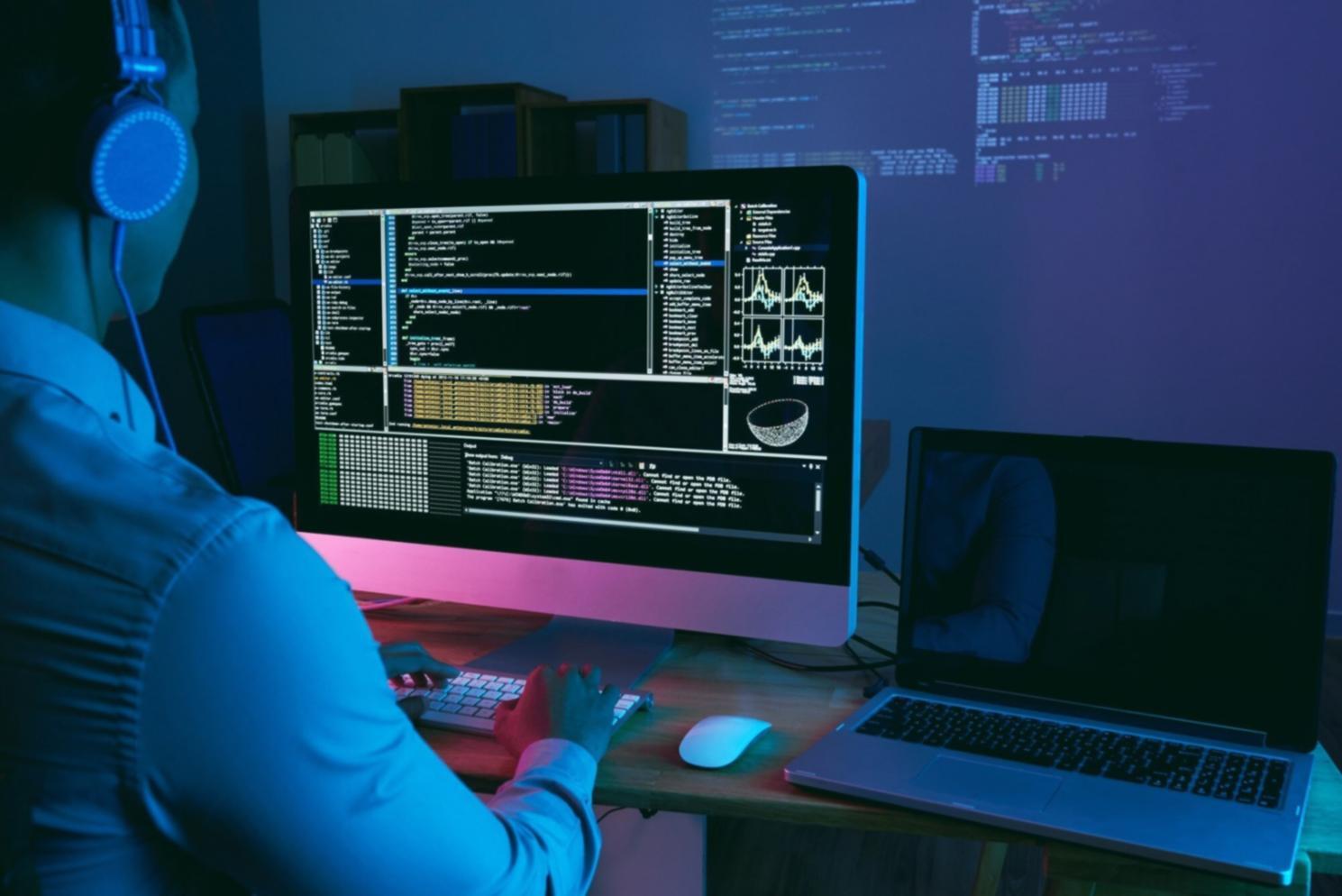
Redefine Reality Through Virtual Worlds & Intelligence
We're building learning experiences that don't just teach concepts—they transport you into environments where theory becomes tangible and skills develop through genuine immersion.
Training That Responds to You
Most educational content follows a fixed path. Everyone gets the same experience regardless of how they think or what they already know. We've spent the last three years developing AI systems that actually watch how you work through problems.
When you're moving too quickly through fundamentals, the system adds depth. When you're ready for complexity ahead of schedule, it adapts. This isn't about collecting data points—it's about creating learning paths that feel personal because they genuinely are.
Our March 2026 cohort will be the first to experience this fully integrated adaptive framework across virtual environments. The technology reads your interaction patterns and adjusts difficulty, pacing, and contextual support in real-time.

What Makes Immersive Learning Different
Spatial Memory
Your brain remembers places better than abstract concepts. When you learn to code in a virtual workshop where each function has a physical location, retention increases dramatically. We've seen students recall complex algorithms months later by mentally walking through the space where they first built them.
Mistake Safety
Breaking production systems teaches you to be cautious, not experimental. In VR, you can crash servers, corrupt databases, and trigger cascading failures—then rewind and try again. The best learning happens when consequences are real enough to matter but reversible enough to encourage exploration.
Collaborative Presence
Screen sharing doesn't replicate the feeling of working alongside someone. When you're both manipulating the same 3D system architecture, pointing at specific components, and watching each other's problem-solving approaches, collaboration becomes intuitive rather than forced through video calls and chat.
Building Skills Through Dimensional Thinking
- Traditional coding tutorials show you flat text. We let you walk around your code structure, literally seeing how data flows through functions, where bottlenecks form, and how components connect across three-dimensional space.
- Database relationships make more sense when you can arrange tables in physical space, draw connections between them with your hands, and watch queries travel through the relationships you've created.
- System architecture stops being abstract when you build it piece by piece in a virtual environment, testing each component's integration before moving to the next layer. You're not reading about scalability—you're watching your system handle increasing load in real-time.
- Debugging becomes spatial navigation. Instead of scrolling through logs, you move through your application's execution path, seeing exactly where values change and logic branches take unexpected directions.
From Concept to Implementation
We don't separate theory from practice. Every concept you encounter gets built, tested, and refined in environments that mirror real development workflows—just with the safety and flexibility that only virtual spaces provide.

April 2026 Intake
Our next comprehensive program begins with foundational VR development, moves through AI integration, and culminates in building fully functional applications that combine both technologies.
You'll work on projects that actually matter—not simplified exercises but genuine systems that could be deployed. By the time you complete the program, you'll have a portfolio of work that demonstrates real capability.
Review curriculum detailsReady to Learn Differently?
We're accepting applications for our February and April 2026 programs. Spaces are limited because effective immersive learning requires small cohorts and individual attention. If you're interested in experiencing education that moves beyond screens and lectures, let's talk about whether this approach fits your learning style.
Start a Conversation